
Teej: The Story, Traditions, and Meaning Behind Nepal’s Festival of Women
Aug 7, 2026
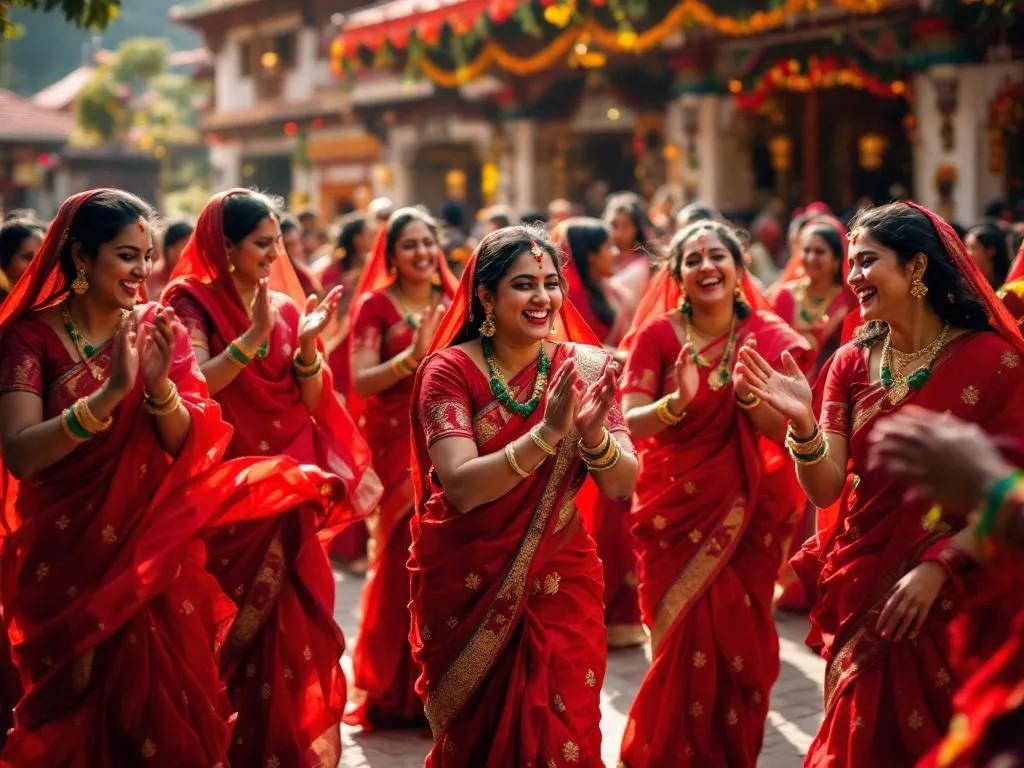
Teej, also known as Haritalika Teej, is one of Nepal’s most celebrated festivals, particularly among women. Observed around August or September, the festival combines religion, tradition, music, dance, family, friendship, and celebration.
Although Teej has strong Hindu religious roots, it has also become an important part of Nepal’s cultural identity and is celebrated by Nepali women around the world.
The traditional story of Teej is connected to Goddess Parvati and Lord Shiva.
According to Hindu tradition, Parvati deeply wished to marry Shiva. She undertook intense meditation and devotion for many years to prove her dedication. Her determination eventually led Shiva to accept her as his wife.
The festival of Haritalika Teej commemorates this devotion and the union of Parvati and Shiva. The name Haritalika is traditionally associated with the story of Parvati being taken away by her friends so that she could continue her devotion to Shiva rather than being forced into a marriage she did not want.
It is important to understand that this is a religious and mythological tradition rather than a historically documented account of how the festival literally began.
Teej traditionally takes place over several days, with each day having its own significance.
Dar Khane Din begins the celebrations. Women gather at their maternal homes or with family and friends for a special feast known as Dar. There is food, music, dancing, laughter, and celebration.
The following day is the main Teej fasting and prayer day. Many women dress in beautiful red sarees, wear bangles and traditional jewelry, sing Teej songs, dance, and visit temples—especially Pashupatinath Temple in Kathmandu. Traditionally, women pray to Lord Shiva for the well-being and longevity of their husbands, while unmarried women may pray for a good future marriage.
The final day is Rishi Panchami, which traditionally involves rituals associated with purification and honoring the seven sages (Saptarishi).
Red is the dominant color of Teej. Red traditionally represents love, energy, prosperity, strength, and married life. Women often wear red sarees, red tika, bangles, and other traditional jewelry during the celebrations.
The sight of thousands of women dressed in red at temples such as Pashupatinath has become one of the most recognizable images of Teej in Nepal.
While Teej has traditionally focused on prayer and marital well-being, its meaning has grown over time.
For many women, Teej is also a chance to return home, reconnect with family and friends, share stories, sing, dance, and express themselves. Teej songs have increasingly become a way for women to talk about family, relationships, social expectations, and issues affecting women's lives.
Today, Teej is celebrated not only in Nepal but also by Nepali communities around the world, helping younger generations stay connected to Nepali culture and heritage.
At its heart, Teej is a celebration of devotion, relationships, sisterhood, tradition, and cultural identity. What began as a festival rooted in the story of Parvati and Shiva has evolved into a vibrant cultural celebration that brings generations of Nepali women together.
Teej is not simply a day of fasting—it is a celebration of Nepali women, their traditions, their voices, and their connection to one another.